


%20copy.webp)


Swiv nou sou Instagram
Plis pase yon Konpayi Deyò.

@sawyerproducts
Follow us on Instagram


Read this sweet story to see how an exchange of knowledge can be like water in a desert and have an impact for a lifetime.
Watch videoWater is life, and the entire mobility of nomadic families revolves around it.
The Merzouga desert, at the gateway to the Moroccan Sahara, is a captivating and immense landscape, but at the same time extremely arid. Water, the most precious resource, is becoming increasingly scarce, and this reality forces the nomadic families who live there to constantly move from one well to another in search of this essential element.
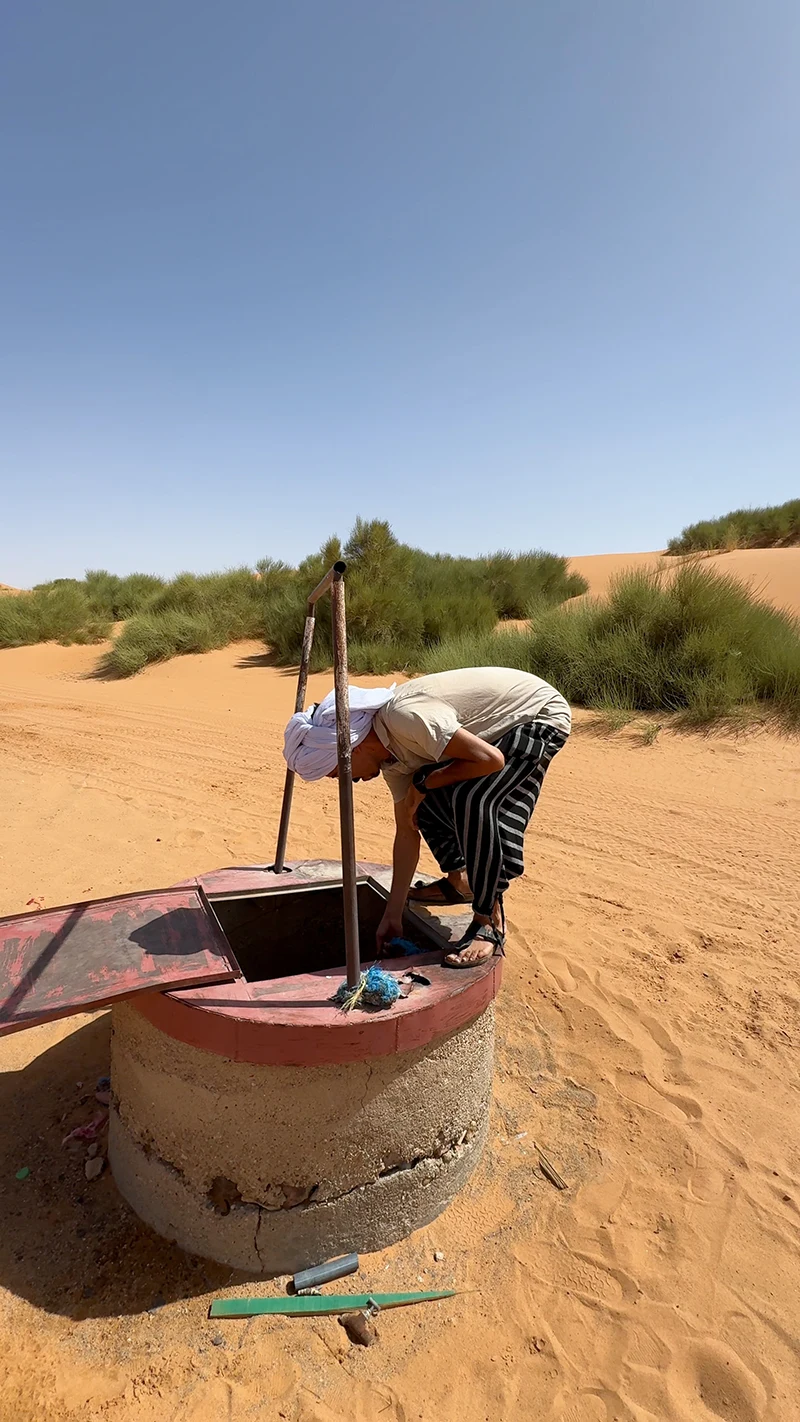
The main source of water comes from wells, complemented by small natural deposits formed among the dunes and, on rare occasions, by temporary puddles left after brief rains. However, in recent years, rainfall has become increasingly scarce.
Climate change has intensified drought across Morocco, with rain levels falling up to 50% below the average of previous decades.
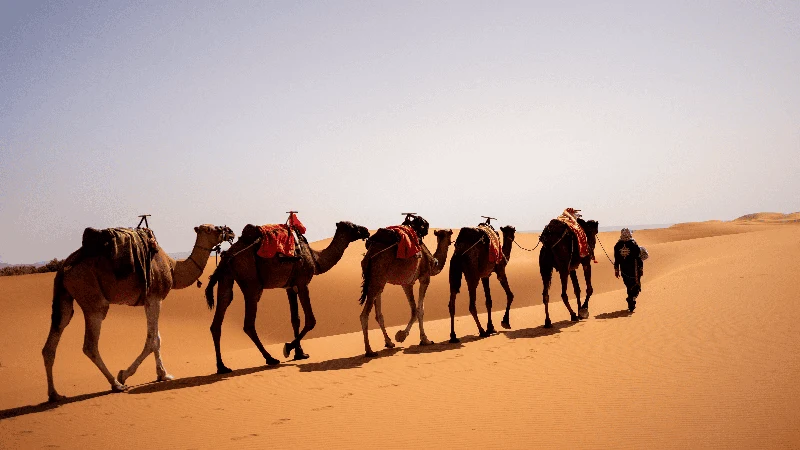
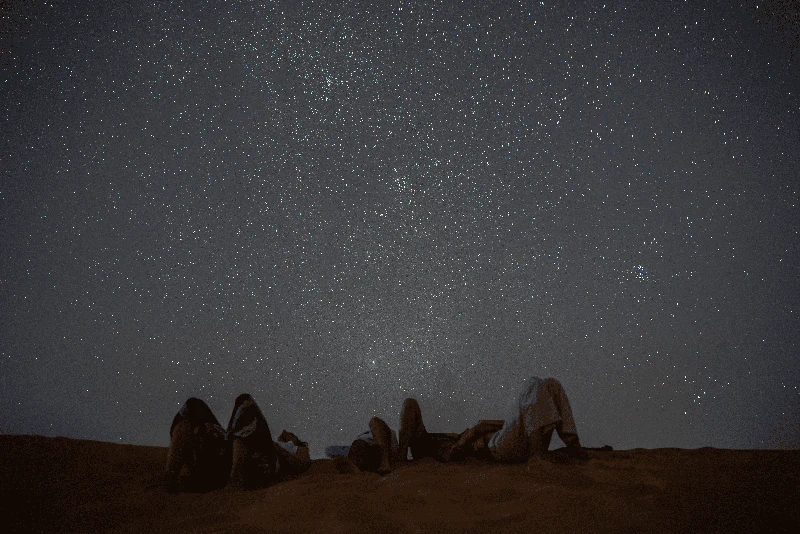
Nomadic families mainly move at night, when the desert becomes more passable. This is because the extreme heat of the day makes it almost impossible to travel long distances. At night, however, the temperature moderates and the star-filled sky becomes a natural map.
In this way, the constellations guide their path, while the moonlight illuminates and accompanies families as they make their way through the dunes.
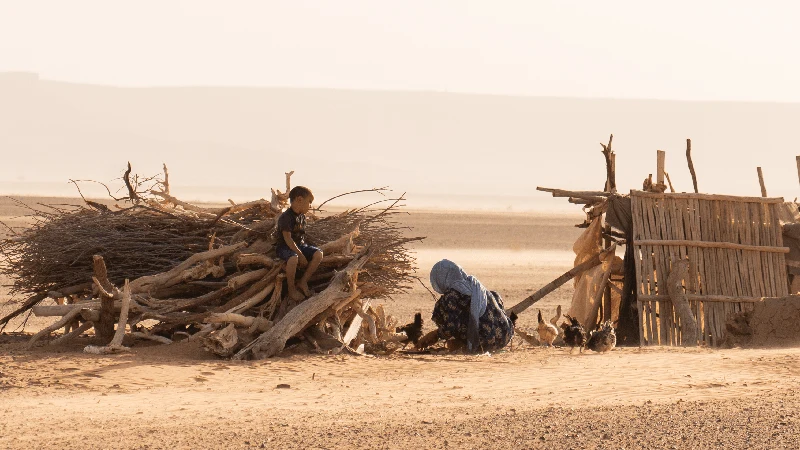
Nomadic families have developed their own methods for filtering water using the resources available to them. One of the most common techniques consists of placing layers of fabric at the entrance of a funnel so that the water from the well passes through this filter before being consumed. This system is useful for retaining visible impurities such as sand, stones, or dirt.
However, these filters do not remove invisible elements such as bacteria or parasites. This represents a significant health risk, potentially causing intestinal infections, recurrent diarrhea, parasites, and even kidney problems such as stones.
This reality made us aware of the need to explore complementary solutions.
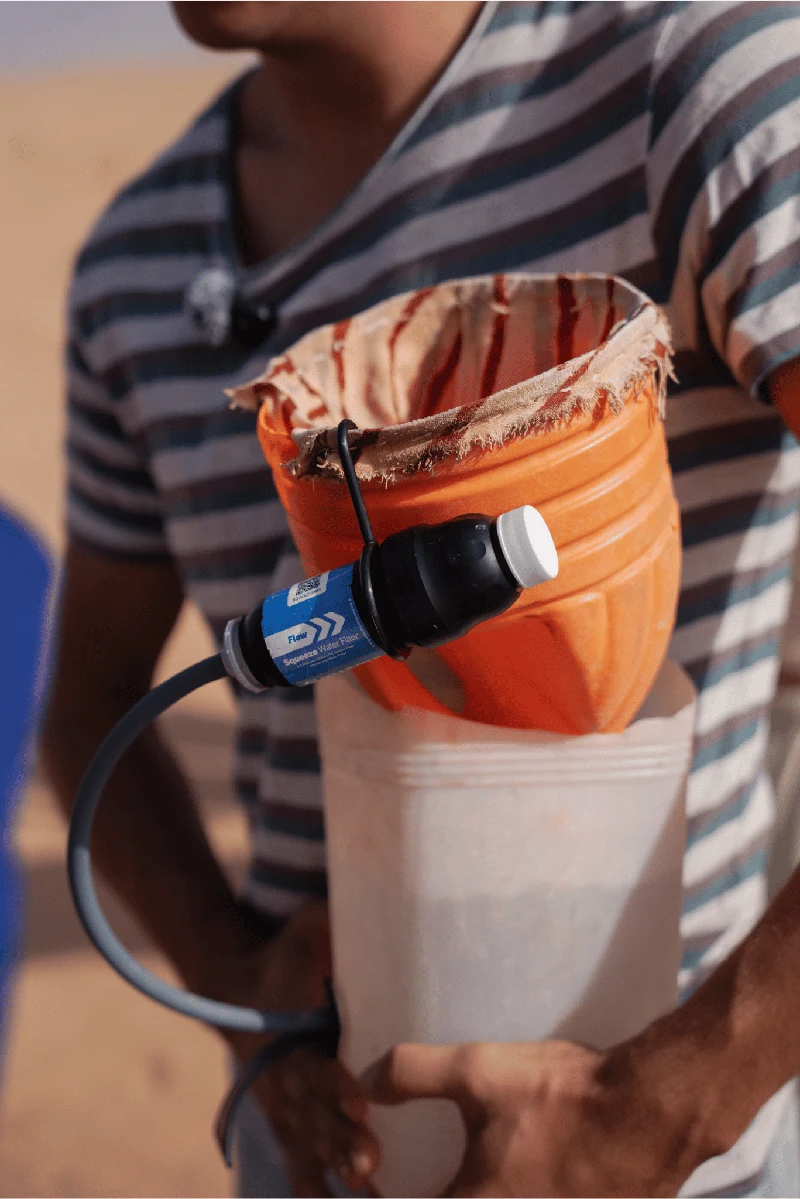
Aware of the situation, and taking advantage of the fact that we would be spending several days living with nomadic families alongside a group of 15 travelers, we decided to contact Sawyer prior to our trip. They quickly took an interest in the issue and provided us with a donation of twelve of their PointOne filters, a system that works by gravity and eliminates harmful bacteria, protozoa, and cysts.
The goal was not to replace local systems, but to offer a complementary tool that could help improve community health.
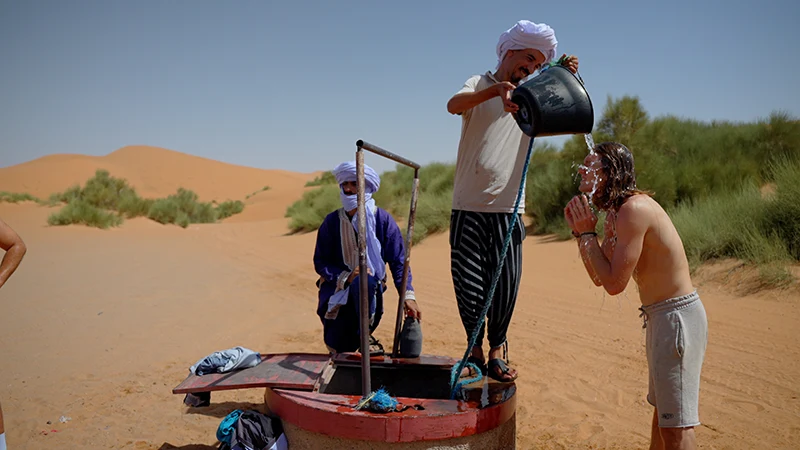
The adventure began with a 15-km trek through the heart of the desert, where we learned how they relate to such an arid landscape and how they know every resource it offers. Along the way, we made several stops to take so-called “Berber showers,” a traditional method of refreshing and hydrating the body using small water points.
Thanks to our guide and friend Hassan, who was born and raised within this lifestyle, we were able to understand the reality of these communities firsthand. The experience was deeply enriching. It was particularly revealing to observe the contrast between those who were born and raised in this environment, who did not need to hydrate at any time, and us, who are not adapted to these conditions and constantly depended on water to stay hydrated.
In the desert, we understood that survival is not about strength or endurance: it is about knowledge, respect, and a deep connection with the land.
We arrived at a deeply remote place, where the silence of the desert set the pace of life.
After several hours of walking, and a beautiful lunch break under the shade of a lone tree, we reached the camp just as the sun was setting behind the dunes. The nomadic family welcomed us with warmth and hospitality, making us feel at home from the first moment. There, we were able to learn about their daily practices, their traditional cuisine, and how they cook in such an arid environment.
That first night, sleeping under the star-filled desert sky, we understood how little we need when we appreciate what nature gives us.
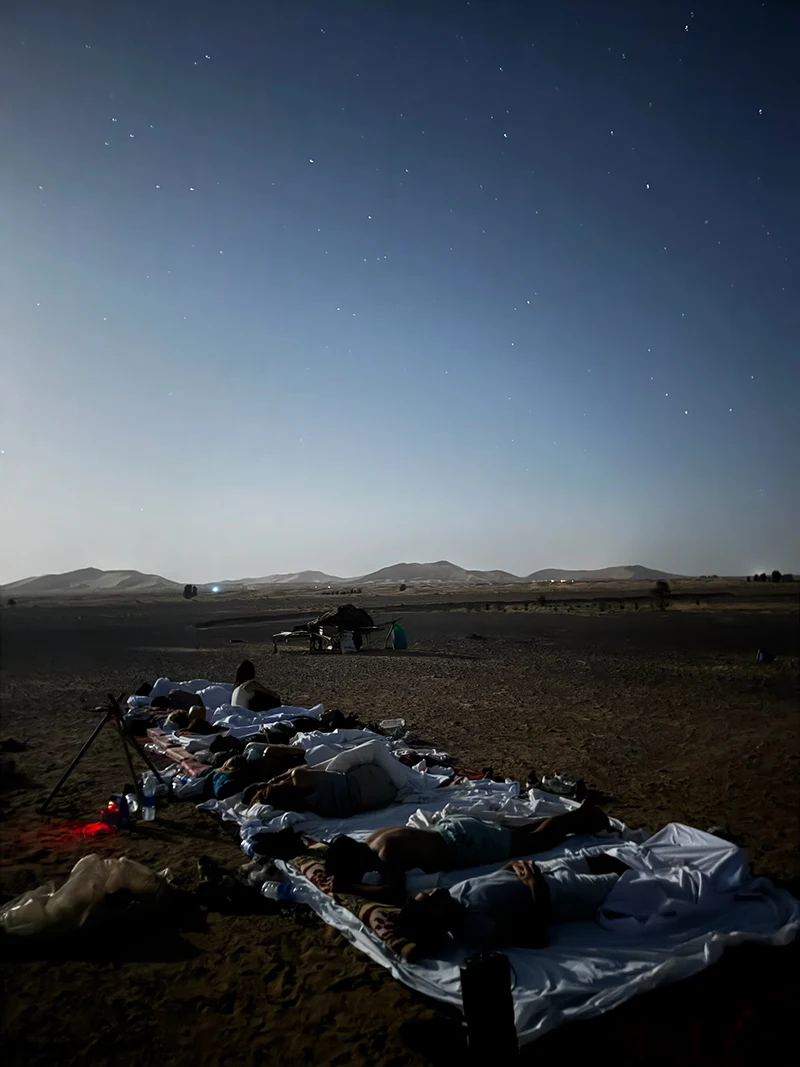
The following morning, after an incredible sunrise, we began explaining how to install and use the filter. The first installation took place with the family who had hosted us in the middle of the desert.
Thanks to Hassan's translations and the technical support of Ot Puy, who was familiar with how the filter worked, we were able to share this system with several families.
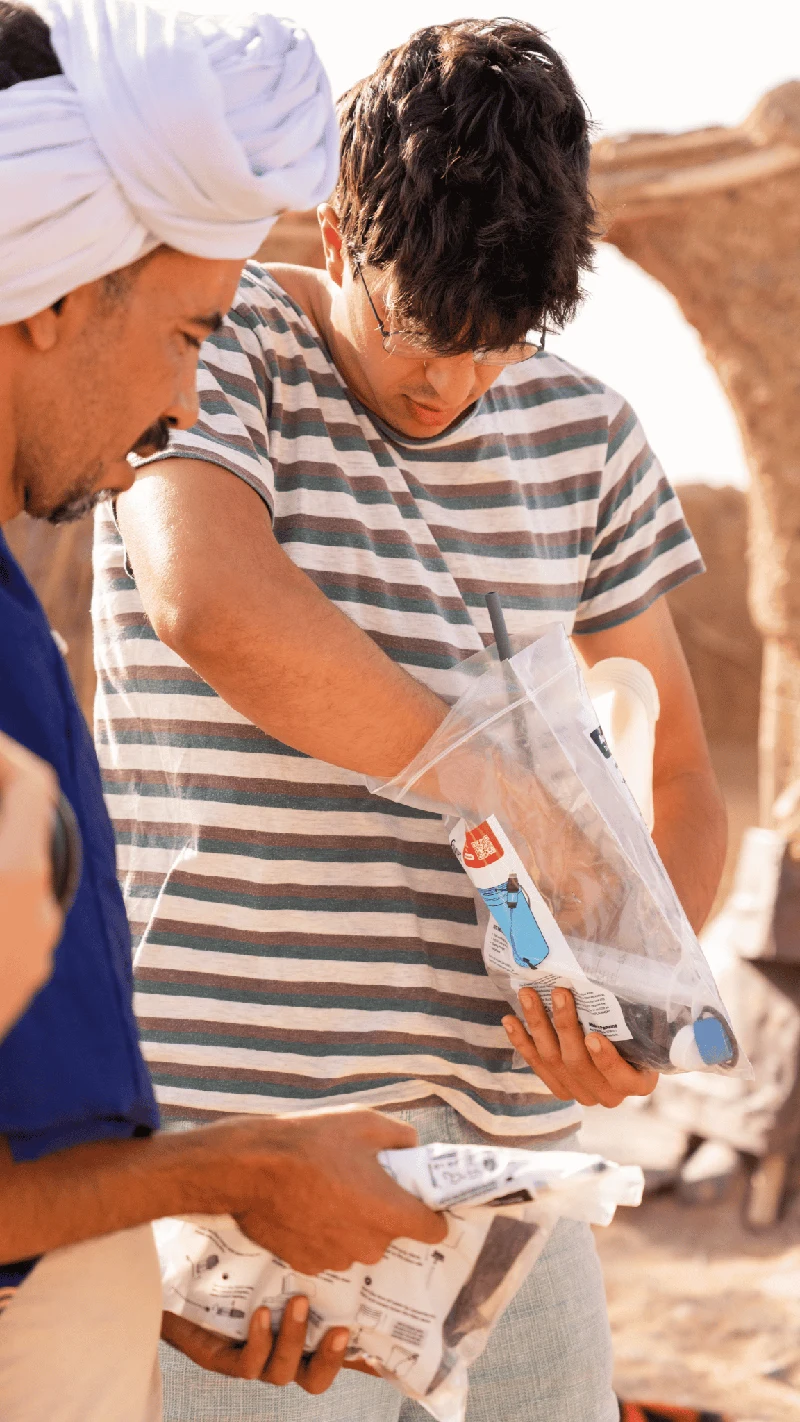
At all times, we tried to act with respect and humility, avoiding any paternalistic attitude or view. We were not there to “teach them how to do things,” but simply to share a useful tool that they could integrate if they considered it appropriate and suitable.
From the beginning, their response was warm and full of interest. The family quickly understood how the filter worked and incorporated it naturally into their daily lives. At the same time, we learned a lot from their traditional filtering system, their relationship with water, and the way they adapt their ancestral knowledge to such a hostile environment.
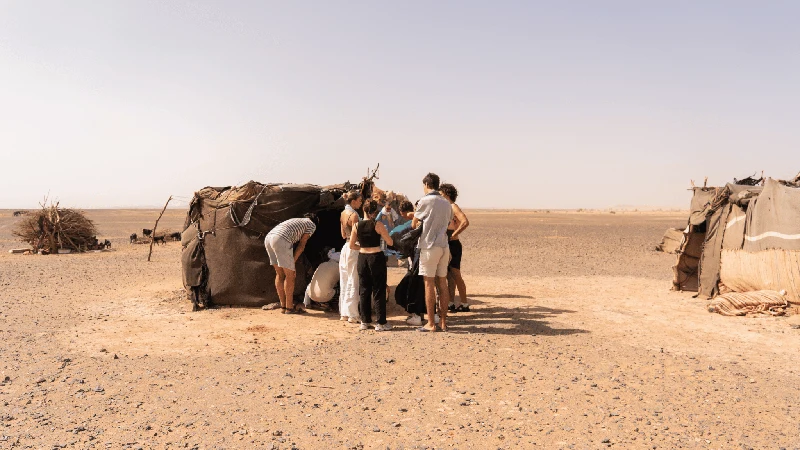
From there, we continued visiting other families and communities. The filter distribution route allowed us to access locations that are not usually part of tourist circuits and are not easily accessible.
This opportunity offered us a more authentic perspective on nomadic life and allowed us to discover different nomadic settlements, daily practices, and social dynamics that we might never have encountered otherwise. With each family, we first took the time to establish a human connection, and only then did we introduce the use of the filter.
This balance between sharing and listening gave meaning to the entire project.
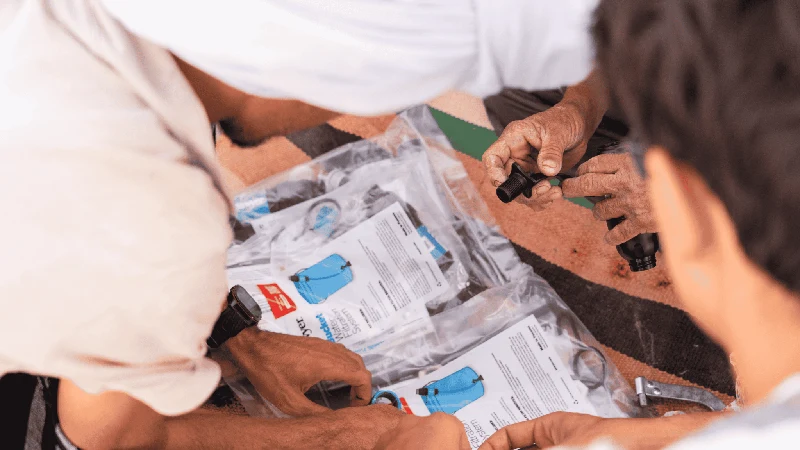
Looking ahead, we will closely follow how families integrate the filters into their daily lives and evaluate their impact on health. This initial project has been just a first step, but we are excited about the possibility of developing a broader initiative that can benefit not only a few families, but all communities in the desert.
We also want to hear from neighboring communities, find out if they are also interested, and explore how we can expand this project without altering or undervaluing their traditional knowledge.
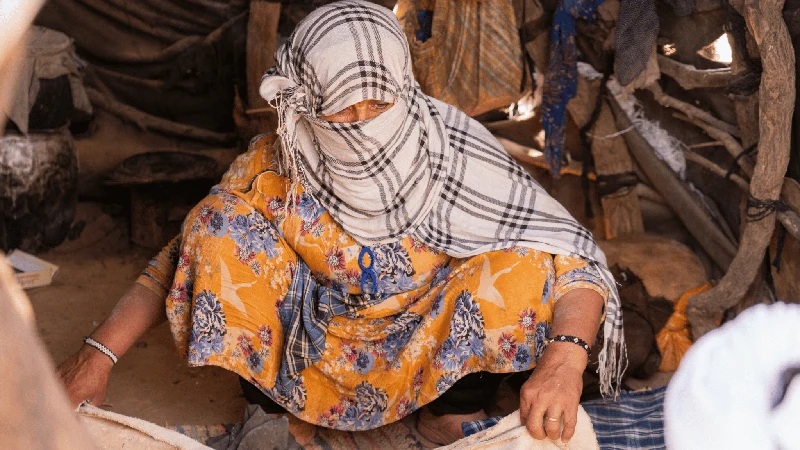
For nomadic families, water is not just a resource: it is their vital compass. Where there is water, there is life; when it disappears, it forces them to move, adapt, or often abandon their nomadic tradition.
What we take away from this experience is that true exchange only happens when there is mutual respect and listening. We offered a technological tool, yes, but we received much more: knowledge, stories, and new ways of understanding life and our relationship with water.
The desert taught us that water is not merely a resource: it is an element that shapes mobility, health, and even the culture of these communities.
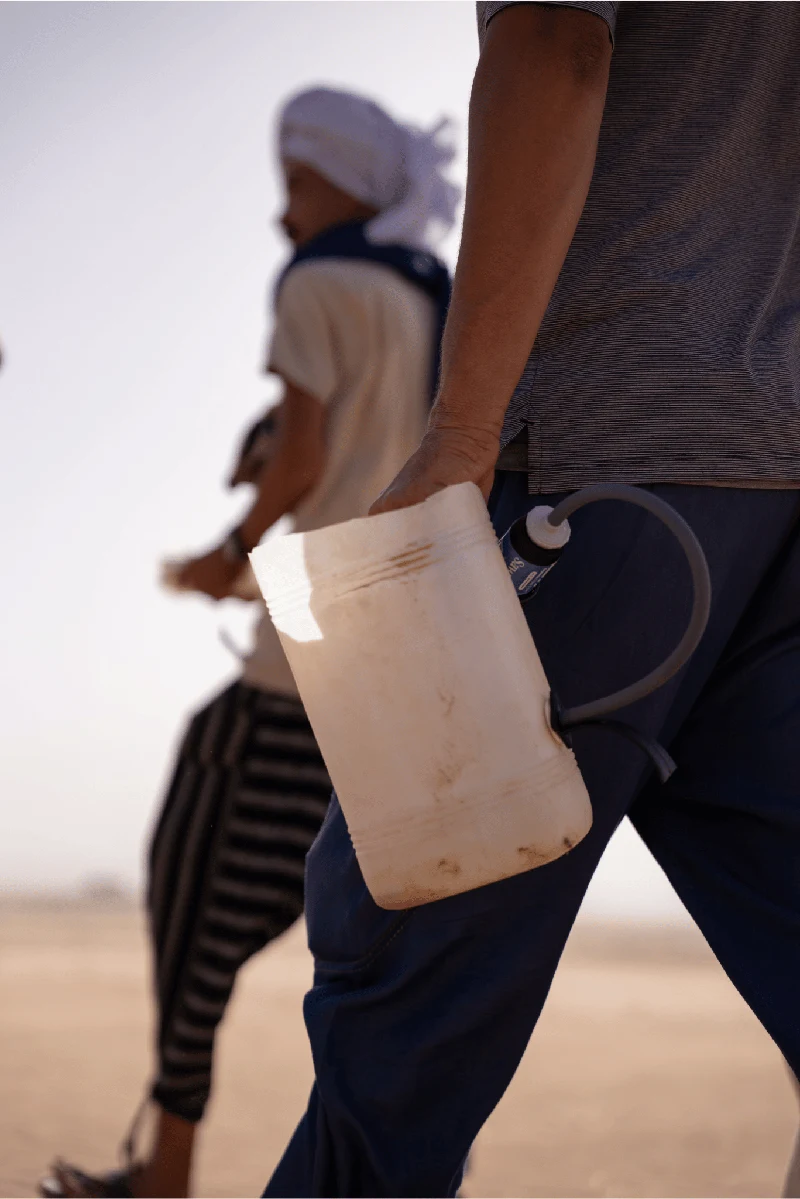

Water is life, and the entire mobility of nomadic families revolves around it.
The Merzouga desert, at the gateway to the Moroccan Sahara, is a captivating and immense landscape, but at the same time extremely arid. Water, the most precious resource, is becoming increasingly scarce, and this reality forces the nomadic families who live there to constantly move from one well to another in search of this essential element.
The main source of water comes from wells, complemented by small natural deposits formed among the dunes and, on rare occasions, by temporary puddles left after brief rains. However, in recent years, rainfall has become increasingly scarce.
Climate change has intensified drought across Morocco, with rain levels falling up to 50% below the average of previous decades.
Nomadic families mainly move at night, when the desert becomes more passable. This is because the extreme heat of the day makes it almost impossible to travel long distances. At night, however, the temperature moderates and the star-filled sky becomes a natural map.
In this way, the constellations guide their path, while the moonlight illuminates and accompanies families as they make their way through the dunes.
Nomadic families have developed their own methods for filtering water using the resources available to them. One of the most common techniques consists of placing layers of fabric at the entrance of a funnel so that the water from the well passes through this filter before being consumed. This system is useful for retaining visible impurities such as sand, stones, or dirt.
However, these filters do not remove invisible elements such as bacteria or parasites. This represents a significant health risk, potentially causing intestinal infections, recurrent diarrhea, parasites, and even kidney problems such as stones.
This reality made us aware of the need to explore complementary solutions.
Aware of the situation, and taking advantage of the fact that we would be spending several days living with nomadic families alongside a group of 15 travelers, we decided to contact Sawyer prior to our trip. They quickly took an interest in the issue and provided us with a donation of twelve of their PointOne filters, a system that works by gravity and eliminates harmful bacteria, protozoa, and cysts.
The goal was not to replace local systems, but to offer a complementary tool that could help improve community health.
The adventure began with a 15-km trek through the heart of the desert, where we learned how they relate to such an arid landscape and how they know every resource it offers. Along the way, we made several stops to take so-called “Berber showers,” a traditional method of refreshing and hydrating the body using small water points.
Thanks to our guide and friend Hassan, who was born and raised within this lifestyle, we were able to understand the reality of these communities firsthand. The experience was deeply enriching. It was particularly revealing to observe the contrast between those who were born and raised in this environment, who did not need to hydrate at any time, and us, who are not adapted to these conditions and constantly depended on water to stay hydrated.
In the desert, we understood that survival is not about strength or endurance: it is about knowledge, respect, and a deep connection with the land.
We arrived at a deeply remote place, where the silence of the desert set the pace of life.
After several hours of walking, and a beautiful lunch break under the shade of a lone tree, we reached the camp just as the sun was setting behind the dunes. The nomadic family welcomed us with warmth and hospitality, making us feel at home from the first moment. There, we were able to learn about their daily practices, their traditional cuisine, and how they cook in such an arid environment.
That first night, sleeping under the star-filled desert sky, we understood how little we need when we appreciate what nature gives us.
The following morning, after an incredible sunrise, we began explaining how to install and use the filter. The first installation took place with the family who had hosted us in the middle of the desert.
Thanks to Hassan's translations and the technical support of Ot Puy, who was familiar with how the filter worked, we were able to share this system with several families.
At all times, we tried to act with respect and humility, avoiding any paternalistic attitude or view. We were not there to “teach them how to do things,” but simply to share a useful tool that they could integrate if they considered it appropriate and suitable.
From the beginning, their response was warm and full of interest. The family quickly understood how the filter worked and incorporated it naturally into their daily lives. At the same time, we learned a lot from their traditional filtering system, their relationship with water, and the way they adapt their ancestral knowledge to such a hostile environment.
From there, we continued visiting other families and communities. The filter distribution route allowed us to access locations that are not usually part of tourist circuits and are not easily accessible.
This opportunity offered us a more authentic perspective on nomadic life and allowed us to discover different nomadic settlements, daily practices, and social dynamics that we might never have encountered otherwise. With each family, we first took the time to establish a human connection, and only then did we introduce the use of the filter.
This balance between sharing and listening gave meaning to the entire project.
Looking ahead, we will closely follow how families integrate the filters into their daily lives and evaluate their impact on health. This initial project has been just a first step, but we are excited about the possibility of developing a broader initiative that can benefit not only a few families, but all communities in the desert.
We also want to hear from neighboring communities, find out if they are also interested, and explore how we can expand this project without altering or undervaluing their traditional knowledge.
For nomadic families, water is not just a resource: it is their vital compass. Where there is water, there is life; when it disappears, it forces them to move, adapt, or often abandon their nomadic tradition.
What we take away from this experience is that true exchange only happens when there is mutual respect and listening. We offered a technological tool, yes, but we received much more: knowledge, stories, and new ways of understanding life and our relationship with water.
The desert taught us that water is not merely a resource: it is an element that shapes mobility, health, and even the culture of these communities.
Water is life, and the entire mobility of nomadic families revolves around it.
The Merzouga desert, at the gateway to the Moroccan Sahara, is a captivating and immense landscape, but at the same time extremely arid. Water, the most precious resource, is becoming increasingly scarce, and this reality forces the nomadic families who live there to constantly move from one well to another in search of this essential element.
The main source of water comes from wells, complemented by small natural deposits formed among the dunes and, on rare occasions, by temporary puddles left after brief rains. However, in recent years, rainfall has become increasingly scarce.
Climate change has intensified drought across Morocco, with rain levels falling up to 50% below the average of previous decades.
Nomadic families mainly move at night, when the desert becomes more passable. This is because the extreme heat of the day makes it almost impossible to travel long distances. At night, however, the temperature moderates and the star-filled sky becomes a natural map.
In this way, the constellations guide their path, while the moonlight illuminates and accompanies families as they make their way through the dunes.
Nomadic families have developed their own methods for filtering water using the resources available to them. One of the most common techniques consists of placing layers of fabric at the entrance of a funnel so that the water from the well passes through this filter before being consumed. This system is useful for retaining visible impurities such as sand, stones, or dirt.
However, these filters do not remove invisible elements such as bacteria or parasites. This represents a significant health risk, potentially causing intestinal infections, recurrent diarrhea, parasites, and even kidney problems such as stones.
This reality made us aware of the need to explore complementary solutions.
Aware of the situation, and taking advantage of the fact that we would be spending several days living with nomadic families alongside a group of 15 travelers, we decided to contact Sawyer prior to our trip. They quickly took an interest in the issue and provided us with a donation of twelve of their PointOne filters, a system that works by gravity and eliminates harmful bacteria, protozoa, and cysts.
The goal was not to replace local systems, but to offer a complementary tool that could help improve community health.
The adventure began with a 15-km trek through the heart of the desert, where we learned how they relate to such an arid landscape and how they know every resource it offers. Along the way, we made several stops to take so-called “Berber showers,” a traditional method of refreshing and hydrating the body using small water points.
Thanks to our guide and friend Hassan, who was born and raised within this lifestyle, we were able to understand the reality of these communities firsthand. The experience was deeply enriching. It was particularly revealing to observe the contrast between those who were born and raised in this environment, who did not need to hydrate at any time, and us, who are not adapted to these conditions and constantly depended on water to stay hydrated.
In the desert, we understood that survival is not about strength or endurance: it is about knowledge, respect, and a deep connection with the land.
We arrived at a deeply remote place, where the silence of the desert set the pace of life.
After several hours of walking, and a beautiful lunch break under the shade of a lone tree, we reached the camp just as the sun was setting behind the dunes. The nomadic family welcomed us with warmth and hospitality, making us feel at home from the first moment. There, we were able to learn about their daily practices, their traditional cuisine, and how they cook in such an arid environment.
That first night, sleeping under the star-filled desert sky, we understood how little we need when we appreciate what nature gives us.
The following morning, after an incredible sunrise, we began explaining how to install and use the filter. The first installation took place with the family who had hosted us in the middle of the desert.
Thanks to Hassan's translations and the technical support of Ot Puy, who was familiar with how the filter worked, we were able to share this system with several families.
At all times, we tried to act with respect and humility, avoiding any paternalistic attitude or view. We were not there to “teach them how to do things,” but simply to share a useful tool that they could integrate if they considered it appropriate and suitable.
From the beginning, their response was warm and full of interest. The family quickly understood how the filter worked and incorporated it naturally into their daily lives. At the same time, we learned a lot from their traditional filtering system, their relationship with water, and the way they adapt their ancestral knowledge to such a hostile environment.
From there, we continued visiting other families and communities. The filter distribution route allowed us to access locations that are not usually part of tourist circuits and are not easily accessible.
This opportunity offered us a more authentic perspective on nomadic life and allowed us to discover different nomadic settlements, daily practices, and social dynamics that we might never have encountered otherwise. With each family, we first took the time to establish a human connection, and only then did we introduce the use of the filter.
This balance between sharing and listening gave meaning to the entire project.
Looking ahead, we will closely follow how families integrate the filters into their daily lives and evaluate their impact on health. This initial project has been just a first step, but we are excited about the possibility of developing a broader initiative that can benefit not only a few families, but all communities in the desert.
We also want to hear from neighboring communities, find out if they are also interested, and explore how we can expand this project without altering or undervaluing their traditional knowledge.
For nomadic families, water is not just a resource: it is their vital compass. Where there is water, there is life; when it disappears, it forces them to move, adapt, or often abandon their nomadic tradition.
What we take away from this experience is that true exchange only happens when there is mutual respect and listening. We offered a technological tool, yes, but we received much more: knowledge, stories, and new ways of understanding life and our relationship with water.
The desert taught us that water is not merely a resource: it is an element that shapes mobility, health, and even the culture of these communities.
Plis pase yon Konpayi Deyò.

